Water Damage Repair Services for San Antonio Homes
Water damage repair services in San Antonio start the same way in every home: stop the water, dry the structure, then rebuild. What changes is where water hides. A slab home, a two-story house, a condo and a rental each need a slightly different plan. Shut off the water, then call to be connected.
- NAHB reports 97.9% of new single-family homes in Texas and nearby states were built on slabs in 2024, so most newer San Antonio homes sit on concrete.
- SAWS advises shutting off the main water service at the meter if you suspect a leak at home.
- SAWS says typical water hardness ranges from 15 to 20 grains per gallon, from minerals in the Edwards and Trinity aquifers.
- TDI says most home and renters policies cover sudden water damage but usually not gradual leaks or seepage.
- TDI warns that mold can start growing within a day after a leak, so drying should start quickly.
What do water damage repair services in San Antonio include?
Water damage repair services in San Antonio usually cover four steps: removing standing water, taking out materials that cannot be saved, drying the structure, and rebuilding what was removed. A local provider checks moisture with meters along the way so walls and floors are truly dry before new drywall or flooring goes in.
- Extraction: pumps and vacuums pull water out of carpet, pad and hard floors.
- Removal: soaked pad, insulation and the lower part of drywall may be cut out.
- Drying: air movers and dehumidifiers run until readings return to normal. Our structural drying page explains this stage.
- Repair: drywall, baseboards, paint and flooring are replaced after drying.
Your type of home changes where water travels.
How does water damage spread in a single-story slab home?
In a single-story slab home in San Antonio, water spreads sideways across the concrete and wicks up into drywall, baseboards and cabinets. It cannot drain down, so it sits under flooring and in wall bottoms until it is pulled out and dried.
Most newer homes in this region are built on slabs. Common trouble spots include laminate and vinyl plank that trap water underneath, carpet pad in bedrooms next to a bathroom, and kitchen cabinet bases near the dishwasher or sink. A moisture meter finds where the water stopped, which is often farther than the visible stain.
What changes when water damage starts upstairs in a two-story house?
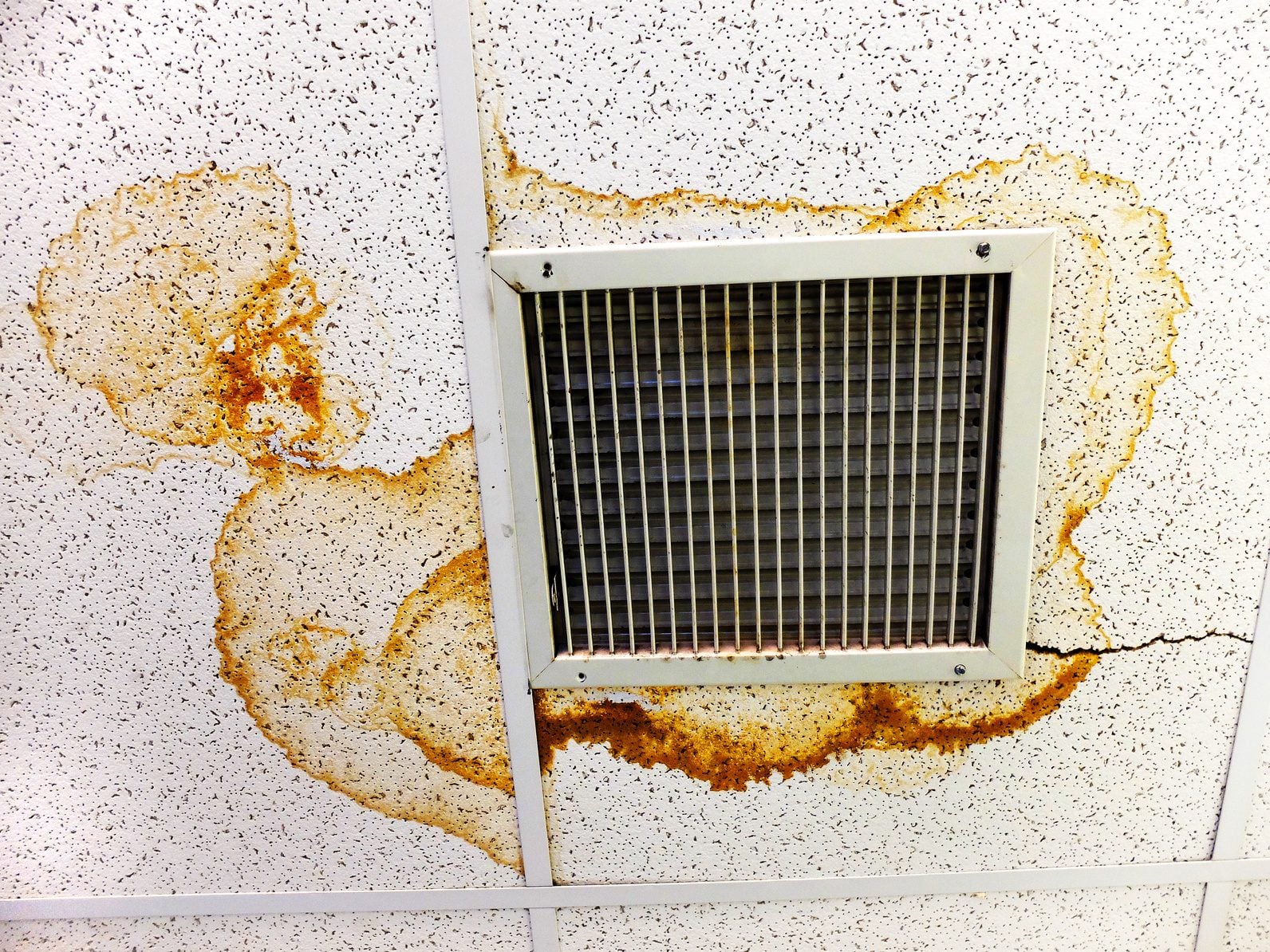
When a leak starts upstairs in a two-story San Antonio house, water runs down through the floor framing and ceiling below, so two levels need drying instead of one. The ceiling under an upstairs bathroom or laundry room is the most common place to see it first.
- A brown ring or bubble on the downstairs ceiling often means water is pooling above it.
- Stay out from under a ceiling that is sagging or bulging with water.
- Wet ceiling insulation and drywall usually come out so the space between floors can dry.
Toilet supply lines, tub drains and washing machine hoses on the second floor are frequent sources. See appliance leak water damage cleanup for more on washer and dishwasher leaks.
Need help now? Call to be connected with a local provider in San Antonio who can check availability for your address.
Who handles water damage in a condo or townhome with shared walls?
In a San Antonio condo or townhome, water damage often crosses into a neighbor's unit or a shared wall, so you may need to coordinate with the HOA or property manager as well as your own provider. Start by stopping the water and telling the HOA and neighbors right away.
Your HOA documents usually explain who is responsible for which parts of the building, such as the roof, shared pipes or exterior walls. Take photos in your unit, write down when you found the leak, and ask the HOA whether a master policy is involved. Check both policies and keep copies of every message.
What should a landlord do when a tenant reports water damage?
A San Antonio landlord should get the water shut off, document the damage and arrange drying quickly, because a rental that sits wet is harder and slower to restore. Ask the tenant for photos and the time they first saw the leak, then call to be connected with a local provider.
- Show tenants where the main shutoff and water heater valve are when they move in.
- Ask tenants to report drips, stains and musty smells early, not at move-out.
- TDI says most policies treat sudden damage differently from gradual leaks, so early reports matter.
Which features of San Antonio homes make water damage more likely?
Many San Antonio homes have water heaters in garages or attics and air conditioning units in the attic, which puts water above or beside finished rooms.
- Attic AC drain lines clog and overflow onto the ceiling below.
- Water heaters can leak slowly into a garage wall or suddenly flood a closet.
- Hard water leaves mineral buildup in heaters, valves and appliance hoses, so check them often.
- Roof flashing and valleys can let storm water into the attic. See roof and ceiling leak water damage.
What happens during the visit?
During the visit, the provider inspects the damage, explains your options and gives you a written quote before any work begins. You should know what will be dried, what will be removed and why, before you agree to anything.
- Inspection: they find the source, walk each affected room and check walls, floors and ceilings with moisture meters.
- Options explained: they explain what can be dried in place, what should come out, and whether a plumber or HOA needs to be involved.
- Written quote: you get the scope of work in writing, which you can share with your insurance company or property owner.
Scheduling depends on the provider, so ask about timing when you call.
Water damage in San Antonio homes and nearby cities
Local conditions shape how water damage shows up in Bexar County homes.
- NAHB reports that 97.9% of new single-family homes in the West South Central region, which includes Texas, were built on slab foundations in 2024. So water in newer homes tends to spread across floors.
- SAWS says typical hardness in its water ranges from 15 to 20 grains per gallon, from minerals in the Edwards and Trinity aquifers. Suburbs such as Boerne, New Braunfels and Schertz may have different utilities.
- NWS normals for San Antonio show an average of 122.4 days a year with highs of 90°F or above, which keeps attic AC systems and their drain lines running for much of the year.
- The Lower Colorado River Authority says the Texas Hill Country, known as Flash Flood Alley, has one of the greatest risks for flash floods in the United States.
The same steps apply in Stone Oak, Alamo Heights, Helotes, Leon Valley, Converse and Universal City. See all service areas.
Related pages
Questions people ask
Where can I find water damage repair services in San Antonio for my type of home?
Call the number on this page to be connected with a local provider of water damage repair services in San Antonio. Tell them whether you have a slab home, a two-story house, a condo or a rental so they know where to look.
Does water damage get under the floor in a slab house?
Yes. In a San Antonio slab home, water often sits under laminate, vinyl plank or carpet pad on top of the concrete. A moisture meter shows how far it spread.
Can water damage hurt a concrete slab foundation?
A short, clean leak usually affects the flooring and walls more than the slab itself. If you see new cracks or doors that suddenly stick, ask a qualified inspector or engineer to look at it.
Why is my downstairs ceiling wet when the leak is in the upstairs bathroom?
Water from an upstairs bathroom runs through the floor framing and collects on the ceiling below. In a two-story San Antonio home, that ceiling is often the first place a leak shows.
Should I shut off the water at the meter if I think I have a leak?
Yes. SAWS advises San Antonio customers to shut off the main water service at the meter if they suspect a leak at home.
Who pays for water damage that comes from the condo unit above me?
It depends on the cause, your HOA documents and the policies involved. In San Antonio, notify the HOA and your neighbor in writing, take photos and check your own policy.
What should I do if my townhome leak spread into my neighbor's wall?
Stop the water, tell your neighbor and the HOA right away, and document both sides. A provider can check the shared wall with a moisture meter during the visit.
As a landlord, who should arrange water damage repair in my San Antonio rental house?
Start with your lease, since it usually says who handles repairs and how tenants report problems. Either way, getting the water stopped and the San Antonio rental dried quickly limits the damage.
Can a landlord handle small mold spots in a rental without a license in Texas?
TDLR's owner exemption applies only to residential properties with fewer than 10 dwelling units. Larger properties and hired workers generally need a TDLR license, unless another exemption applies.
Why does my water heater in the garage keep leaking?
Common causes are a worn drain valve, a failing tank, or loose connections. Hard water in San Antonio can add mineral buildup, so have a plumber check it and dry the wet wall nearby.
How do I know if my attic AC drain line is clogged?
Water in the drain pan, a wet spot on the ceiling under the unit, or a safety switch that shuts the AC off are common signs. Turn the system off and have the line cleared.
Does vinyl plank flooring need to come up after a leak?
Often some of it does, because water trapped under vinyl plank dries very slowly. A provider can take moisture readings to see which rows need to come up.
Should I tell my insurance company about water damage in a rental property?
Yes, report it promptly and document it. TDI says hidden water damage usually must be reported within days after you first see it, and each policy sets its own deadline.
Do I need a separate company to rebuild after water damage repair services finish drying?
Not always. Some providers handle both drying and repairs, while others hand off rebuilding. Ask what is included when you call to be connected in San Antonio.
Is water damage repair available in Leon Valley and Universal City?
Yes. The same service covers nearby cities such as Leon Valley, Universal City, Converse and Alamo Heights. Call to be connected with a provider who serves your address.
Talk to someone about your water damage problem
Call to be connected with a local provider who can check availability for your address and explain the next step.